The Unwritten Rules We Carry Into Mid-Career — And How They Quietly Limit What’s Possible
There’s a moment I come back to often when I think about mid-career change.

Someone reached out to me on LinkedIn recently with a question she’d been sitting with for a while. She wanted to teach at a business school and believed she needed a PhD to even be considered. We talked through what a PhD actually involves — the workload, the timeline, the commitments — and at some point I asked her:
“Why do you believe you need a PhD to teach?”
She paused for a long moment.
Then said quietly:
“I’m not sure. I guess I’ve just always assumed that’s the rule.”
And that pause stayed with me.
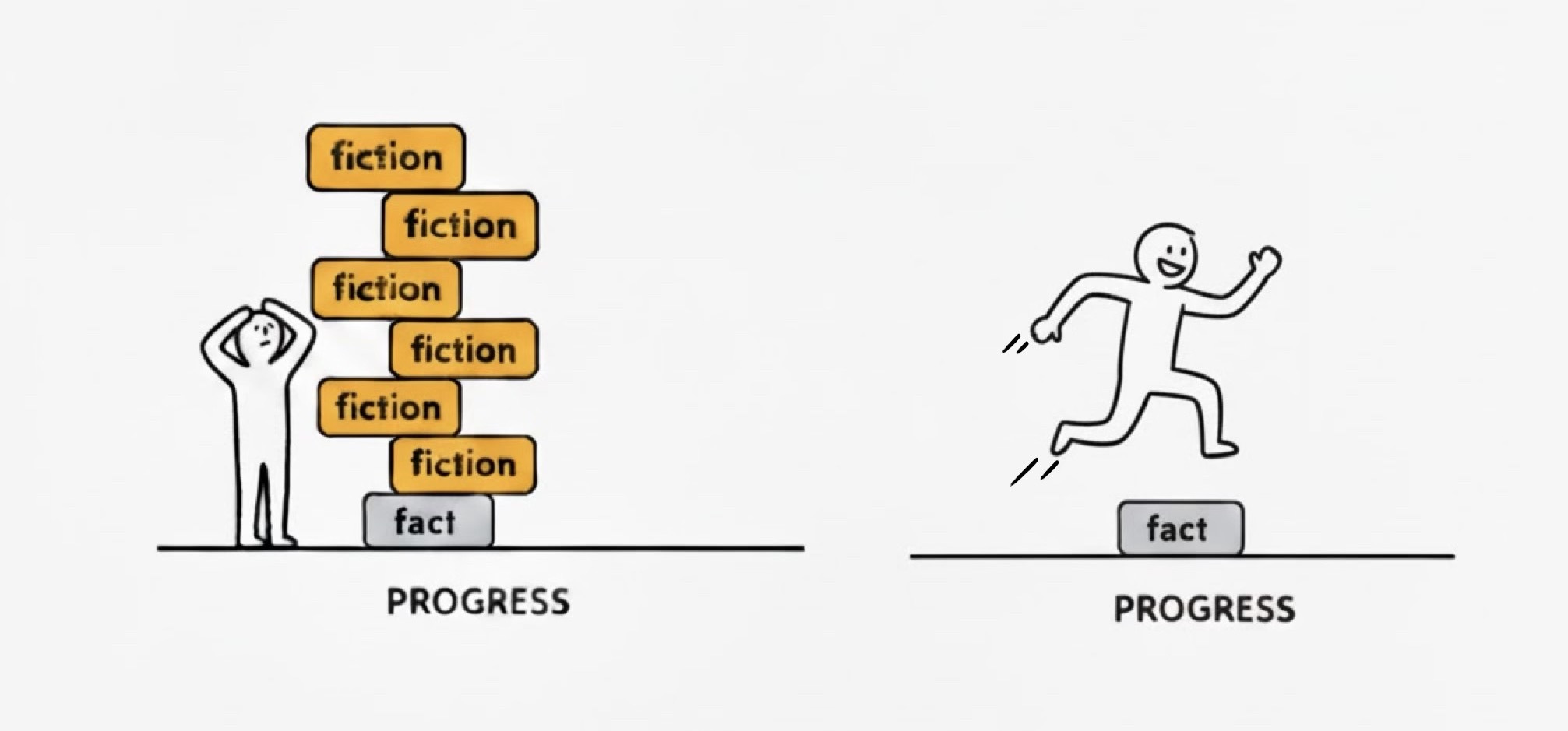
Because once we looked at the facts, the belief didn’t hold:
Business schools regularly bring in professors of practice
Many programs intentionally hire industry experts as guest lecturers
Credibility comes just as much from experience as from credentials
The belief felt true.
The actual landscape was different.
Once she saw that, something opened up.
She remembered she already knew someone who led a program.
She reached out.
A short time later, she was invited to guest lecture.
No additional degree.
No multi-year detour.
Just one assumption replaced with reality.
We all carry unwritten rules into mid-career.
Rules we never agreed to.
Rules we rarely examine.
Rules that quietly limit what we believe is possible.
Things like:
“Before I can do X, I need another degree.”
“If I make a change now, I need to settle for a lower position.”
“I don’t have the skills I need.”
“There’s one right next move… and I have to figure it out perfectly.”
These beliefs often form early in our careers when we have less experience, less perspective, and far fewer examples of nonlinear paths.
But by mid-career, our reality has changed.
We’ve grown, our values have shifted, our priorities have evolved.
Yet the old beliefs stay embedded, shaping decisions long after they’ve stopped being useful.
In many conversations I have, this is where people get stuck — not because they don’t know enough, or aren’t capable enough, but because the mental model they’re using is outdated.
Mid-career isn’t the end of the story. It’s the moment you finally have context.
You know what energizes you.
You know what drains you.
You’ve lived through restructurings, promotions, failures, successes, and everything in between.
You have a sense of how you want to contribute — and what you want to move away from.
This stage isn’t about starting over.
It’s about becoming more accurate about what actually works for you.
But accuracy requires something most people don’t make space for:
Questioning the beliefs that quietly shape your choices.
When you examine them, one of two things happens:
You confirm the belief is true and act with more clarity.
You discover the belief is outdated, incomplete, or simply false — and new paths open.
Either way, you move forward.
This is why micro-experiments are so powerful.
They test beliefs in the real world.
They replace assumptions with data.
They reveal what’s actually possible.
Inside my workshops, the most transformative moments often happen at the end and within two hours — when someone tries the smallest version of an idea they’ve been carrying for years.
Not a full pivot.
Not a full commitment.
Just enough of an experiment to challenge the story they’ve been living inside.
And almost always, the outcome surprises them.
Sometimes the idea loses its appeal.
More often, the experiment expands their sense of possibility.
Either way, they now have evidence, not assumptions.
A gentle question for you:
What belief about your next chapter have you been treating as a fact… without ever checking if it’s true?
You don’t need to overhaul your career to explore this.
You don’t need a grand plan.
You don’t need to be “ready.”
You just need a small experiment — something you can test in the real world — to see what the belief is actually made of.
If you want help identifying that experiment or untangling the belief behind it, feel free to reply or reach out.
This stage of your career doesn’t have to be navigated alone — and sometimes one conversation is enough to help you see a path that was there all along.